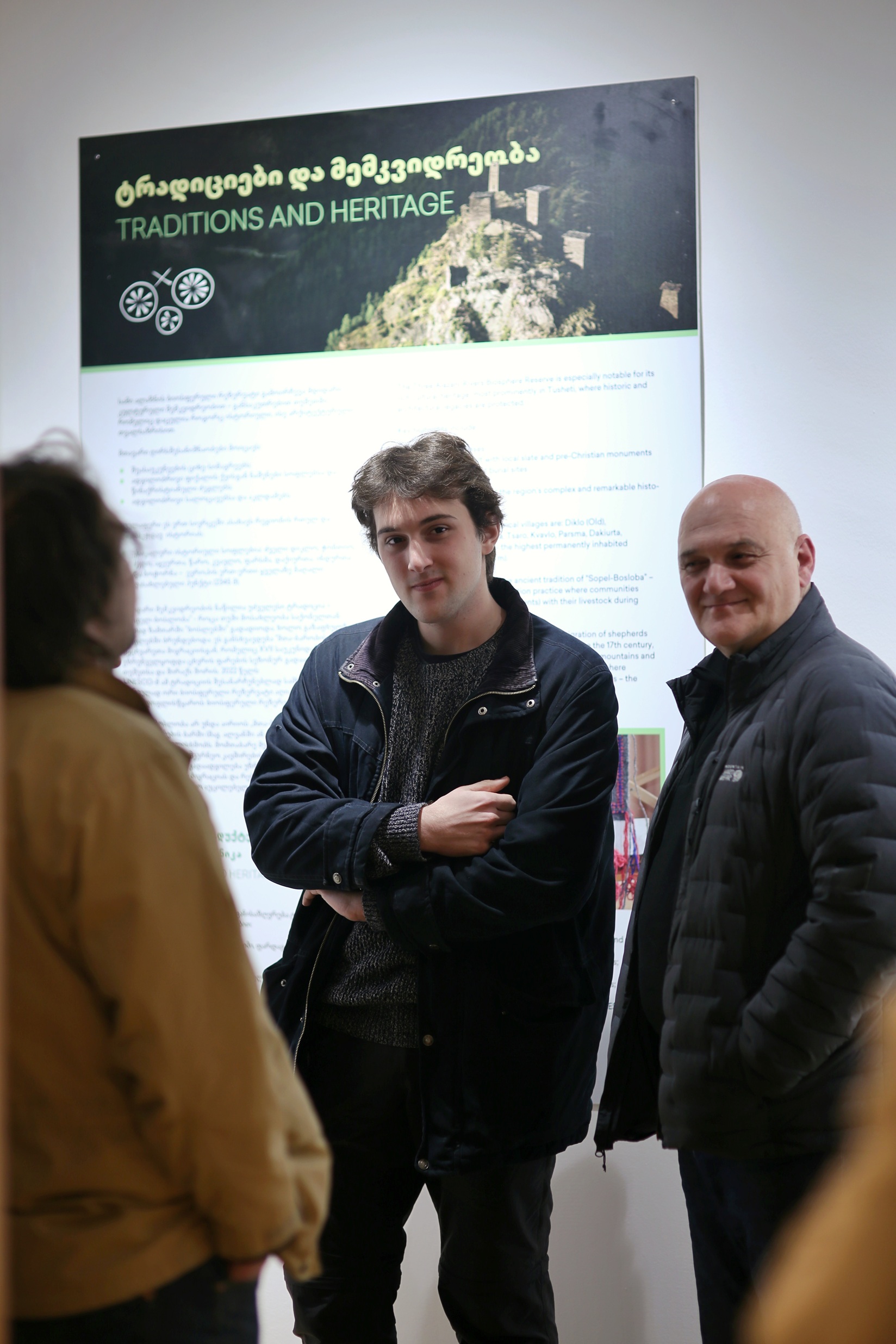
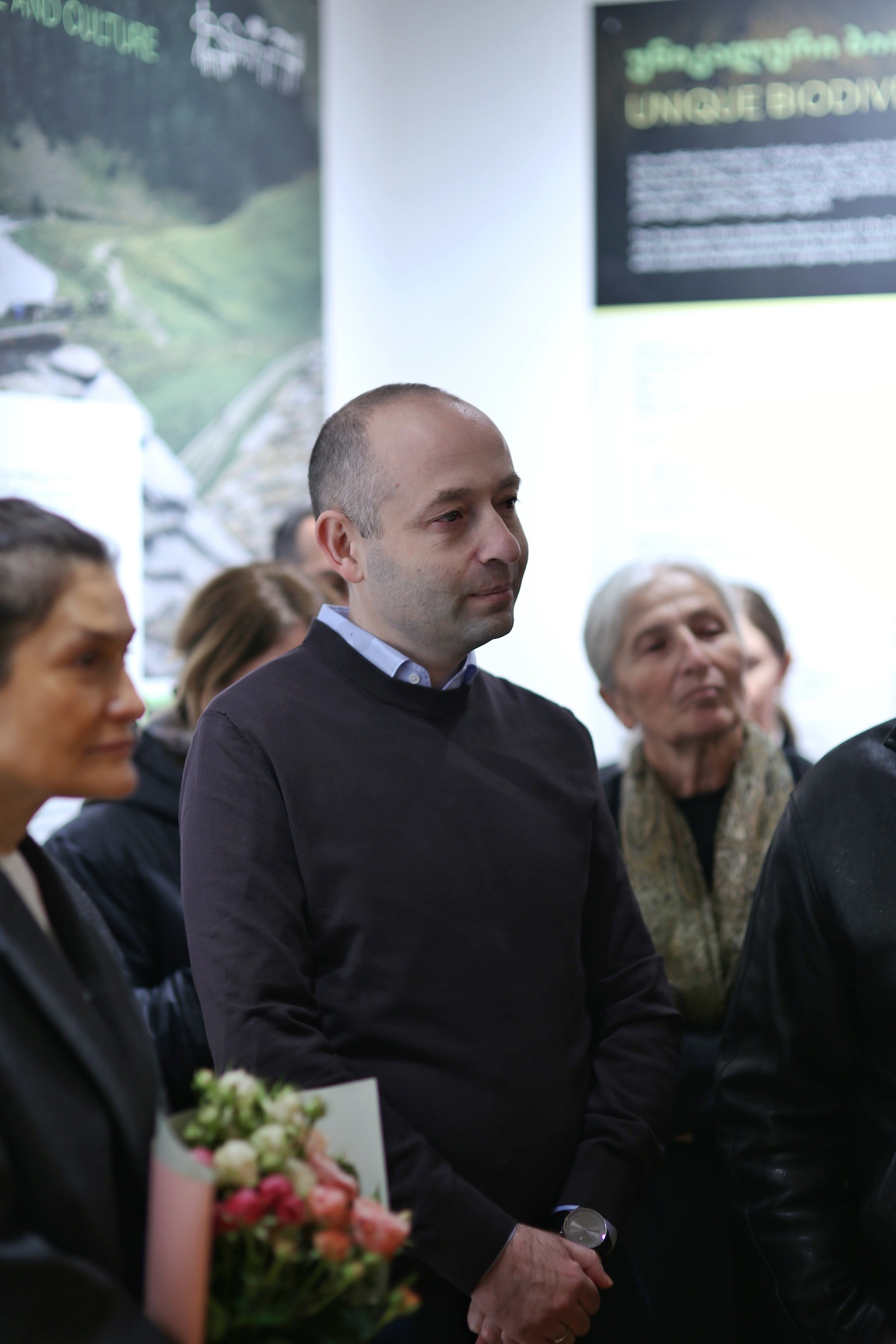
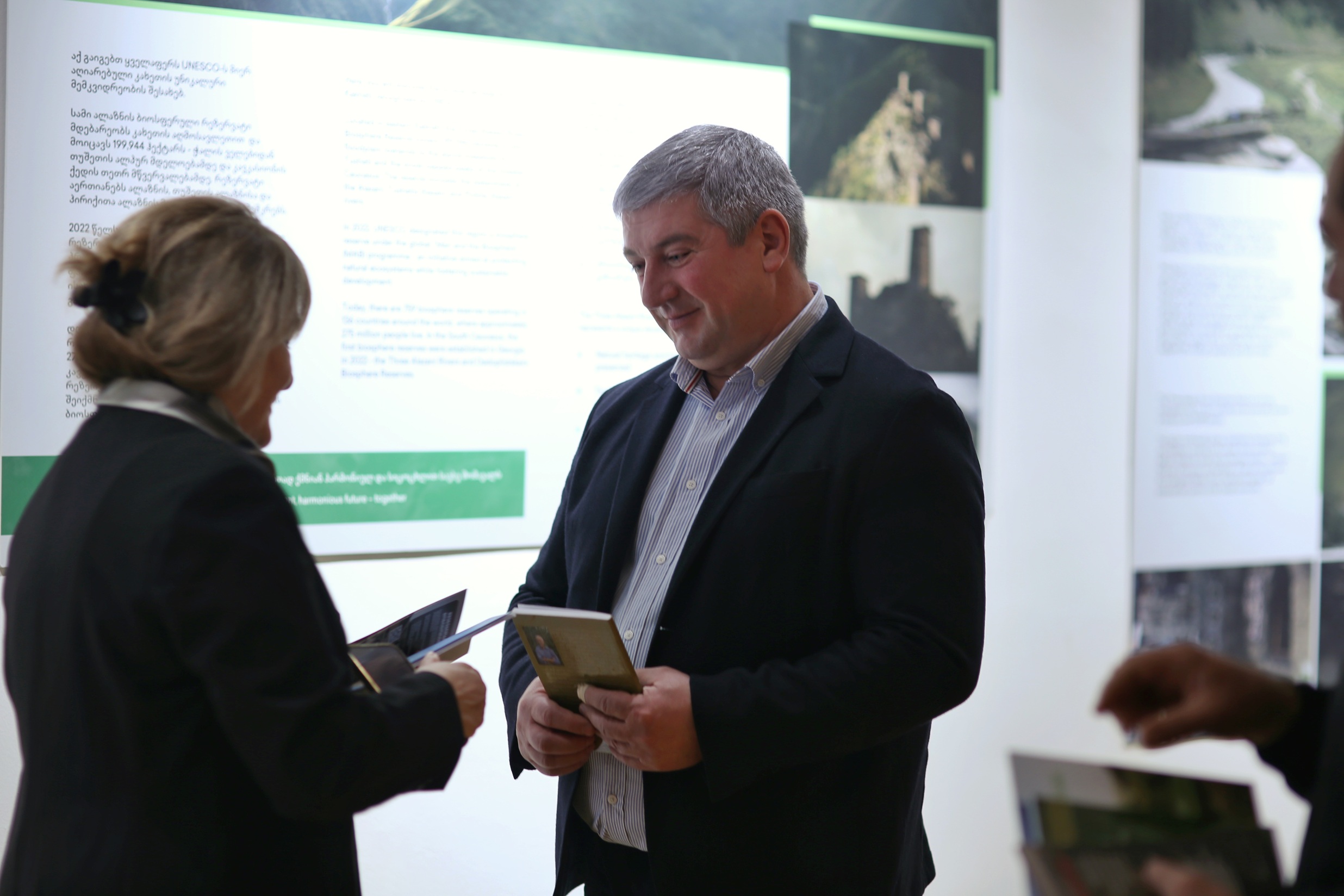
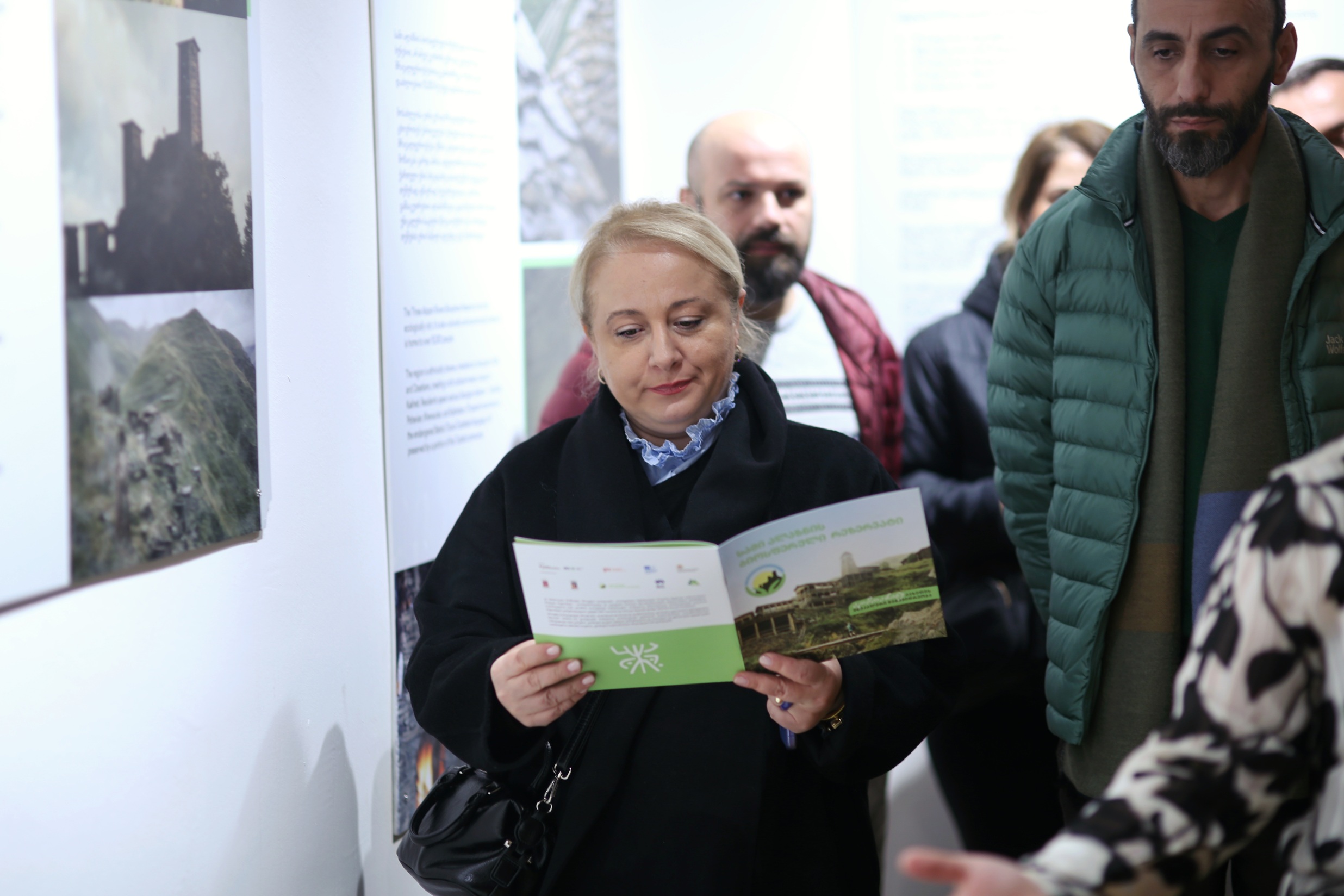
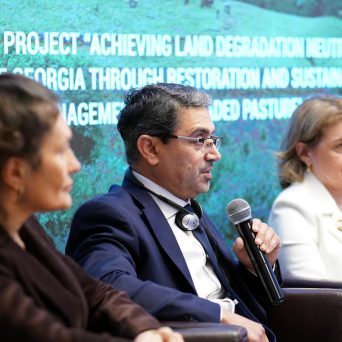
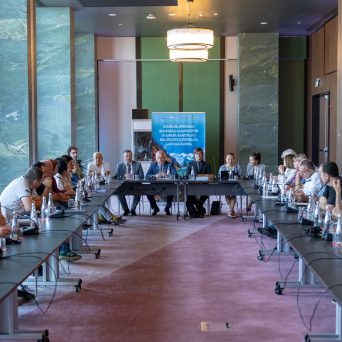
On 19 December, an information space of the Three Alazani Rivers Biosphere Reserve was officially opened in the building of the Akhmeta Municipality City Hall, organized by the Caucasus Regional Environmental Centre (REC Caucasus).
The space aims to introduce the concept of the biosphere reserve to the public, raise awareness, and improve access to information.
The opening event was attended by representatives of state institutions, local self-government authorities, partner organizations, local residents, and beneficiaries of the project’s small grants programme. Participants discussed the role of the biosphere reserve and opportunities for local development.
The information space was established within the framework of the project “Biosphere Reserves as Model Regions for Sustainable Development – Capacity Development for Coordinated and Effective Management of the Three Alazani Biosphere Reserve”, jointly implemented by the Regional Environmental Centre for the Caucasus (REC Caucasus) and the Michael Succow Foundation.
The project is supported within the programme “Policy Dialogue and Knowledge Management on Climate Change Strategies” (DIAPOL-CE), implemented by the Deutsche Gesellschaft für Internationale Zusammenarbeit (GIZ) on behalf of the Federal Ministry for the Environment, Climate Action, Nature Conservation and Nuclear Safety (BMUKN), with support from the International Climate Initiative (IKI).
About the Three Alazani Biosphere Reserve
Recognized by UNESCO in 2022, the Three Alazani Biosphere Reserve is located in eastern Georgia, in the Kakheti region, and covers an area of 199,944 hectares. The reserve is distinguished by its unique geographical and ecological diversity, stretching from the Alazani Valley to the peaks of the Greater Caucasus Range and encompassing the catchment areas of the Alazani, Tusheti Alazani, and Pirikiti Alazani rivers.
The landscapes of the reserve range from 470 to 4,200 meters above sea level and include diverse forests, agricultural lands, and urban areas, while higher elevations are characterized by alpine meadows and unique high-mountain ecosystems.
The area of the Three Alazani Biosphere Reserve is particularly vulnerable to climate change. Land degradation, landslides, and changing climatic conditions pose risks to both local communities and ecosystems. In high-mountain areas, these processes directly affect glaciers, water resources fed by them, and the region’s unique flora.
The Three Alazani Biosphere Reserve was established in response to these challenges and to promote sustainable development in the region.
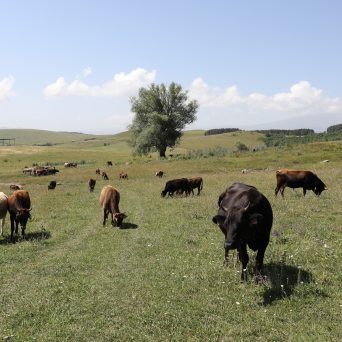
The main objective of the reserve is to protect natural and cultural heritage and biodiversity, strengthen the local economy and improve living standards. At the same time, it supports the preservation of traditional, environmentally compatible activities, including nomadic pastoralism, the introduction of eco-friendly innovations, the development of sustainable economic activities, small businesses and services, as well as the implementation of educational programmes and knowledge sharing to achieve sustainable development.